Countertops are where you chop vegetables , roll out the dough, and set down hot pots. Almost the heart of your kitchen as sometimes you even serve dinner there when the dining table’s full. Choosing the right countertops isn’t always about picking “pretty”. The countertop surfaces should match your lifestyle and your budget. Also, how you actually use your space.
The different materials and choices out there can make you overwhelmed. Granite? Quartz? Marble? Laminate? Butcher block? Then costs vary significantly. It is based on the material, maintenance, and durability. You see options like ” lasts a lifetime” to “needs replacing in 10 years.”
That’s where this guide comes in. I’ll walk you through everything about kitchen countertops. From common countertop materials to real costs, maintenance requirements, and 2026 trends. I’ll throw in some honest pros and cons. By the end, you’ll know exactly which countertop material are the best for your specific needs.
For any professional help with cabinet repair or countertop installation, All One Kitchen has got you covered. We serve home owners throughout the U.S.A. with quality craftsmanship and honest advice.
Kitchen Countertops: Comparison of The Most Popular Materials
I’ll break down each material. How much they cost? And who they’re best for?
Granite Countertops – Natural Stone Beauty Meets Durability
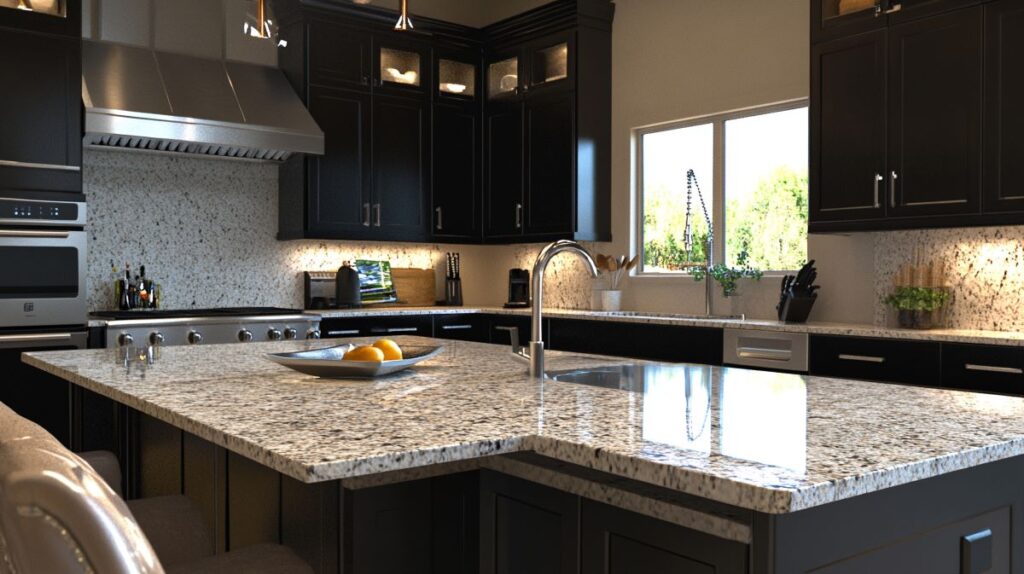
Granite countertops have been the U.S.’s favorite for decades. This natural stone brings natural beauty. You can’t replicate it with engineered materials. Every slab is unique, cut directly from natural stone slabs. Each surface has unique patterns and color variations.
Here’s what makes granite stand out:
- Granite is highly durable.
- It is scratch and heat resistant.
- Ideal for high-traffic kitchens with daily cooking activities.
- Hot pans do not generally damage the surface.
This is a significant advantage over some engineered materials.
Things to consider: Granite is still porous. it can absorb liquids and stain if you’re not careful. Granite countertops equire sealing. Specifically, regular sealing in every 6 to 12 months to resist staining. Skip the sealing, and you’ll regret it. Wine, oil, or citrus juice leaves permanent marks. Also, while granite is tough. It can chip or crack if heavy objects are dropped on them. So those cast iron skillets need to be set down gently.
Also, granite is tough. It can chip or crack if heavy objects are dropped on it. So those cast iron skillets need to be set down gently.
Best for: Homeowners who cook a lot but want natural stone beauty. They don’t mind maintenance like sealing.
Cost: $40–$100 per square foot
Quartz Countertops – The Low-Maintenance Champion
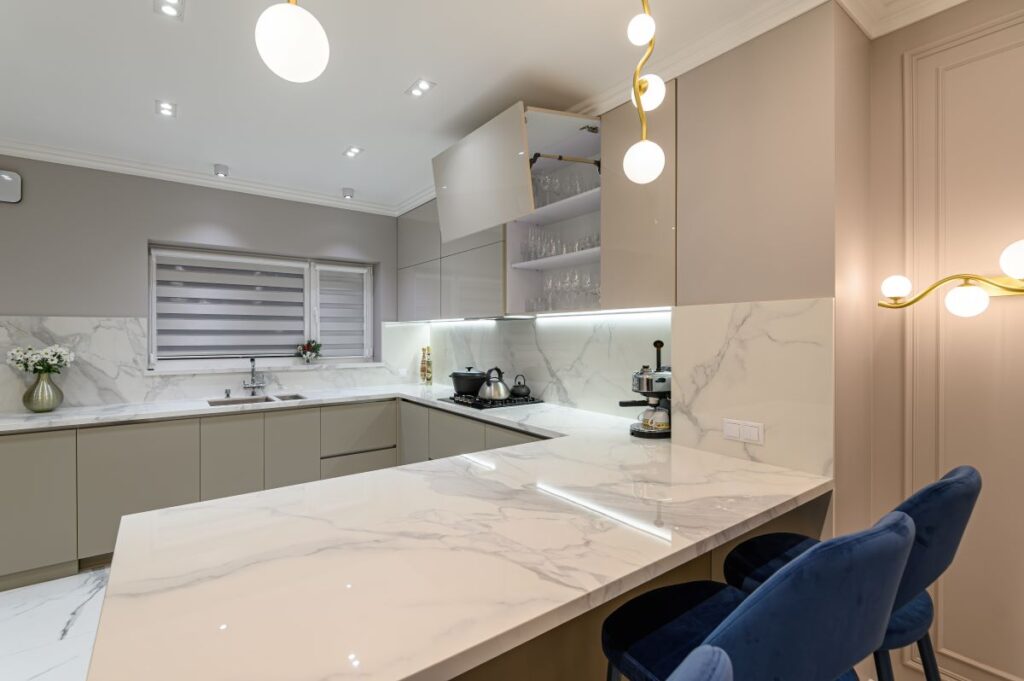
Quartz countertops are called the “low-maintenance champion” for a reason. They come with the stunning and natural look of stone with the durability of an engineered surface. Crushed quartz is mixed with resin to create it. Their non-porous finish resists stains and scratches. It never needs periodic sealing.
Why are quartz countertops so popular?
- Non-porous. Stain resistant and easy to clean
- Do not require sealing like natural stone surfaces do (huge time saver!)
- Scratch resistant. Great for high-traffic areas
- Wide range of colors and patterns. Have convincing marble and granite looks
- Clean easily with just mild soap and water
One thing to note: Quartz is tough. But it’s not heat resistant like granite. The super-hot pots can actually burn the resin. It can leave unsightly marks. Use trivets, and you’ll be fine.
Quartz has become the most popular countertop material among U.S. homeowners. 78% choose it for their kitchen remodels. The reason is it balances durability, style, and maintenance perfectly.
Best for: Busy families and people who want low maintenance countertops,and hates the idea of sealing.
Cost: $50–$120 per square foot
Marble Countertops – Elegant But High Maintenance
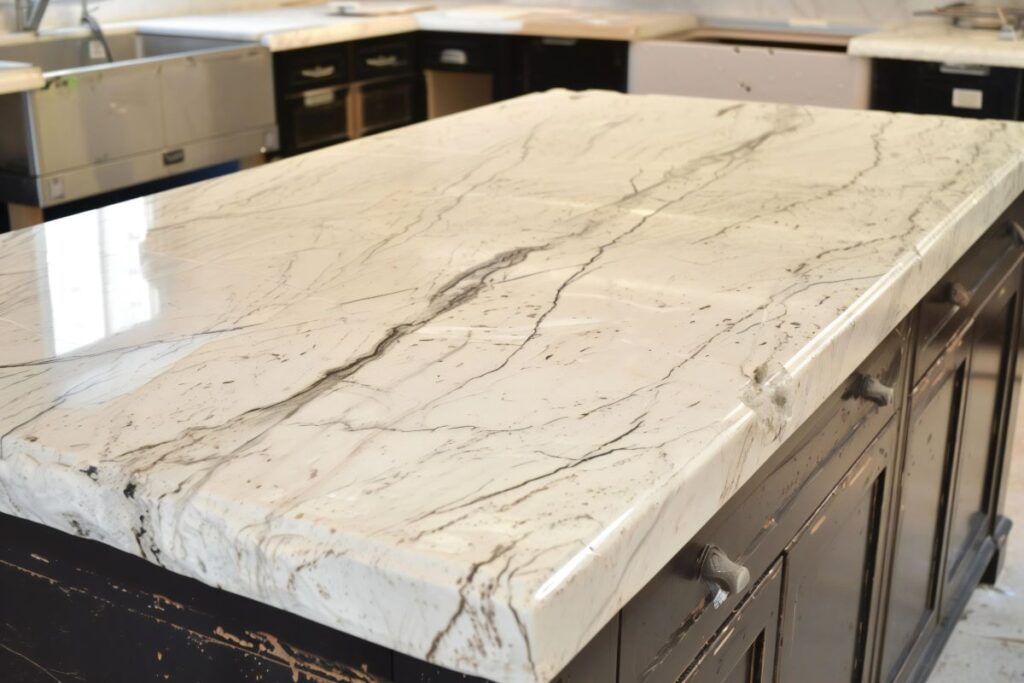
You would know that natural marble is certainly elegant if you have ever seen one in a kitchen. Like the one you’ll find on Pinterest! The beauty of the veining in marble and their organic motion are a rarity. The very first people to get fooled with are the homeowners who value appearance the most.
However, marble countertops need to be sealed as well. It is so because natural marble is more porous than granite. It is also susceptible to scratches. If not taken care of, citric food such as lemon juice or tomato sauce may harm the surface.
Marble facts:
- Elegant and luxurious appearance that adds instant sophistication
- Natural material with unique veining patterns
- Softer than granite, so it scratches and etches more easily
- Requires regular sealing every 6–12 months
- Porous, so it can absorb liquids and staining happens faster than with granite
If you use lots of acidic ingredients, marble may frustrate you. But if you don’t mind maintenance and care, you can go for it.
Best for: Homeowners who want elegant and luxury kitchen countertops. Those who are willing to invest time in care.
Cost: $60–$150 per square foot
Solid Surface Materials – Seamless & Easy to Maintain
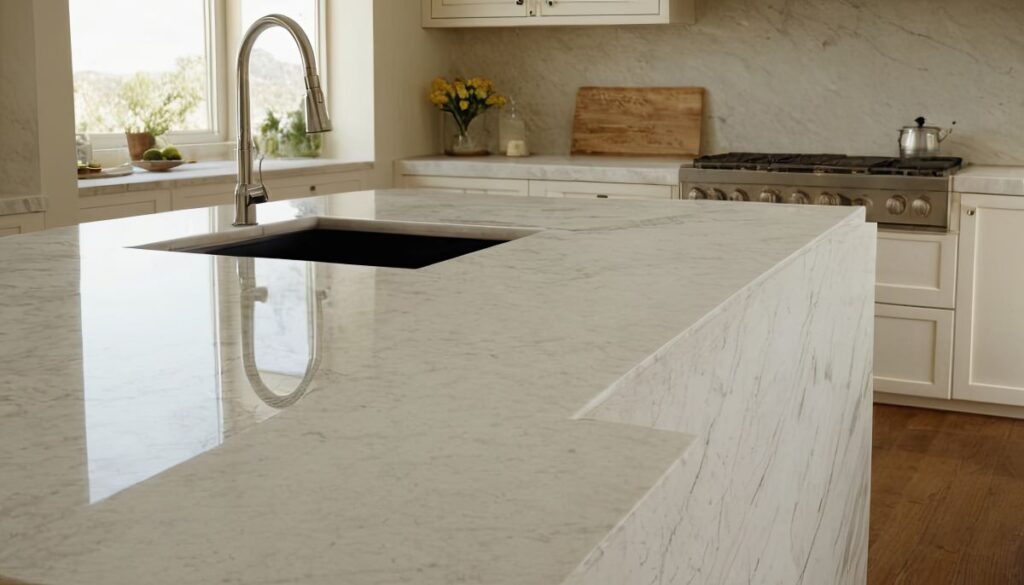
Solid surface materials may not be as popular as granite or quartz, but they’re still a practical option for many homes. They sit somewhere between laminate and natural stone in terms of both look and performance.
Here’s why many homeowners like solid surface countertops:
- They’re non-porous and resist stains and are easy to keep clean
- Seams blend in smoothly, giving the countertop a neat, seamless look
- Daily cleaning is simple with just soap and water
- They can copy the look of natural stone without needing as much upkeep
- Small scratches can usually be sanded out and repaired
Of course, they also have a few downsides. Solid surface countertops can lose their shine over time. They don’t handle heat very well. They may get burned if hot pans are placed on them directly. They are also softer than quartz or granite in high traffic kitchens.
Ideal for: Bathrooms and small kitchens. Primarily for residential use where easy maintenance of counter tops is desired.
Cost: Around $40–$100 per square foot
Concrete Countertops – Customizable but Prone to Cracking
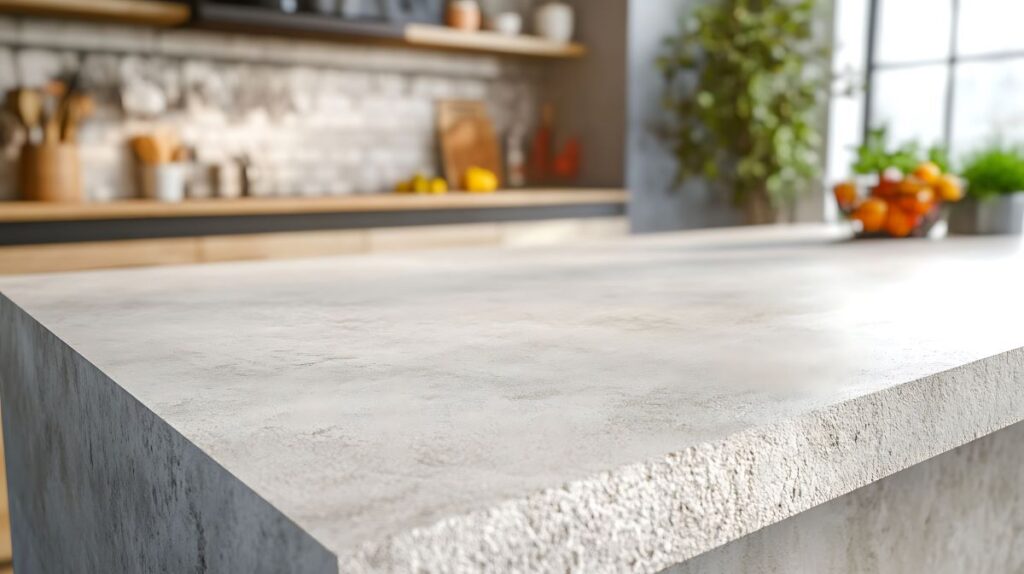
If you want a countertop that nobody else has, concrete might be your answer. You can shape it however you like; curves, custom edges, odd dimensions, and work in embeds like stones or glass if you’re feeling creative. The color options are wide open too, with all kinds of stains and dyes available to get exactly the look you’re going for.
That said, concrete has a real downside worth knowing about. It cracks. Not always, not guaranteed, but it’s common enough that you should go in expecting it. It’s also porous, meaning it soaks up liquids if left unprotected. Same story as natural stone. A good sealant keeps it safe. But once that wears down, spills can leave stains that are tough to reverse.
Concrete highlights:
- Completely custom shapes, edges, and colors
- Heat resistant (you can set hot pans down)
- Modern, industrial style that’s trending in 2026
- Porous and requires sealing
- Prone to cracking over time, especially if the base isn’t supportive enough
- Heavy—your cabinets and floor need to support the weight
Best for: Modern kitchens, homeowners who want custom countertops, and design-forward spaces.
Cost: $65–$135 per square foot
Laminate Countertops – The Most Affordable Option
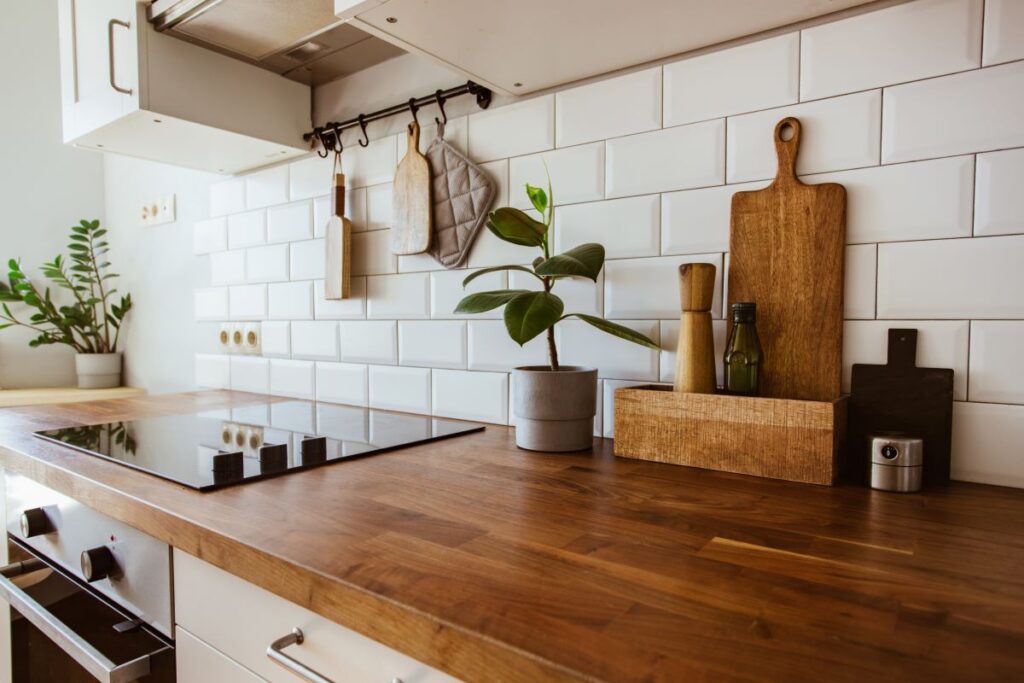
Let’s be honest — budget matters, and laminate countertops know that better than anyone. At somewhere between $10 and $40 per square foot, they’re about as wallet-friendly as countertops get. Compare that to granite, quartz, or solid surface materials, and the difference is hard to ignore.
But here’s what surprises a lot of people: affordable doesn’t mean it looks cheap anymore. Today’s high-definition laminates have come a long way. Some of them mimic granite and marble well enough that guests won’t know the difference at a glance. Wood looks, stone finishes, subtle textures — the options have genuinely gotten good.
Laminate pros:
- Budget-friendly and affordable
- Wide range of colors and patterns
- Easy to install (some homeowners DIY this)
- Low maintenance—just wipe clean
Laminate cons:
- Can dull over time and doesn’t last as long as solid surface materials
- Can’t be refinished—once it’s scratched or burned, it’s done
- Seams are more visible than with solid surface
- Not heat resistant or scratch resistant like stone
Laminate countertops have earned their place in a lot of kitchens and for good reason. Renters love them because there’s no massive investment involved. First-time homeowners love them because the budget can go toward other things.
Best for: Renters, budget-conscious homeowners, and kitchens that don’t take a daily beating.
Cost: $10–$40 per square foot
Butcher Block Countertops – Warmth & Natural Texture
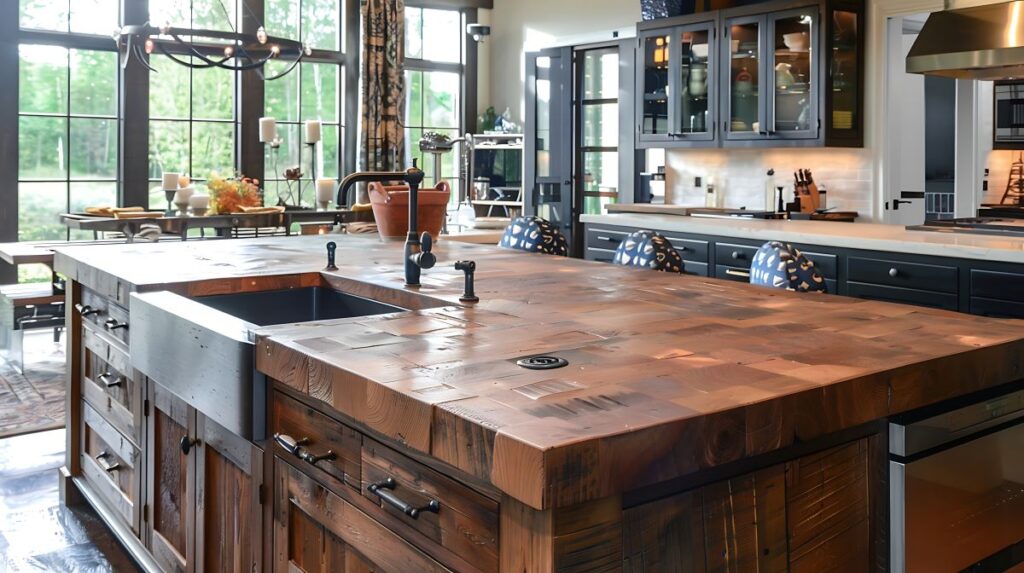
Wood in a kitchen just feels warm — and butcher block delivers that better than almost anything else. It’s more affordable than stone. You can chop directly on it, and if it gets scratched up, a quick sand and re-oil brings it right back.
What makes butcher block worth considering:
- It makes any kitchen feel warmer and more inviting, almost instantly
- It’s easier on the budget than stone, without looking like a compromise
- Scratches and wear can actually be fixed — a light sand and a coat of oil and it looks fresh again
- You can chop and prep directly on it, which is a genuine everyday convenience
- With proper care, it holds up for years
Where it falls short:
- It needs regular oiling — skip that routine and it’ll dry out, crack, and absorb stains
- Hot pans are a no — the surface won’t thank you for it
- It scratches and dents more readily than stone, so it shows its life a little
It is best for farmhouse, rustic, or transitional kitchens. A little wear actually adds character to them.
Best for: Wood lovers who don’t mind some routine maintenance.
Cost: $30–$60 per square foot
It is best for farmhouse, rustic, or transitional kitchens. A little wear actually adds character to them.
Best for: Wood lovers who don’t mind some routine maintenance.
Cost: $30–$60 per square foot
Countertop Cost Guide: How Much Should You Budget?
The costs of countertops vary. They are significantly based on the material used. Knowing the range upfront helps you plan your remodel without sticker shock.
| Material | Cost per Sq. Ft. | Maintenance Level | Lifespan |
| Laminate | $10–$40 | Low | 10–15 years |
| Butcher Block | $30–$60 | High (oiling) | 20+ years (if maintained) |
| Ceramic Tile | $5–$25 | Medium | 10–20 years |
| Concrete | $65–$135 | Medium (sealing) | 20+ years |
| Solid Surface | $40–$100 | Low | 20+ years |
| Granite | $40–$100 | Medium (sealing) | 25+ years |
| Quartz | $50–$120 | Low | 25+ years |
| Marble | $60–$150 | High (sealing) | 20+ years |
Installation costs average $1,850–$4,456 across the USA. It depends on material choice, kitchen size, and complexity. Prefabricated slabs are cheaper but have fewer options. While pre cut custom slabs cost more but suit your specific needs perfectly.
Bathroom Countertops vs. Kitchen Countertops: What’s the Difference?
The main reasons that people select bathroom countertops are somewhat different from those used for kitchens. These include moisture resistance, durability, maintenance and budget. For damp places, non-porous surfaces such as quartz and porcelain tiles are better for bathroom countertops.
The reason is, light colored countertops can help enlarge small bathrooms. They might appear shinier and more clean. Avoid dark granite, if you have a small powder room. Go for light quartz or solid surface.
In addition, marble and granite needs to be periodically sealed to avoid staining in bathroom areas. If not then it speeds up the staining process in the presence of humidity and water exposure.
How to Choose Countertops That Match Your Cabinets & Style
Your countertops and cabinetry should work together.
This is a brief guide:
- Lighter coloured surfaces may make tiny kitchens appear larger.
- Darker countertops may make huge rooms feel more personal.
- Lighter countertops can highlight darker cabinetry.
- Darker counters might work well with lighter cabinetry.
Countertops are a major feature in kitchen design. So appearance and feel are equally as important as durability. Match them to your cabinetry, flooring, and overall design.
2026 Countertop Trends: What’s Hot in the U.S. Market
Want countertops that feel fresh and modern? Here’s what’s trending in 2026:
- Dramatic, deep veining and organic movement in materials are popular trends for countertops
- Engineered quartz with natural stone looks (without the sealing hassles)
- Porcelain countertops—fastest-growing material (company gap: most articles don’t cover this!)
- Made in USA countertops (54% of homeowners prefer domestic products)
- Waterfall island designs
- Matte finishes over glossy
- Warm neutrals: beige, cream, greige (not just white/gray)
More options available than ever before from manufacturers
Installation Tips: What Homeowners Need to Know Before Hiring
Thinking about install ing countertops yourself? You need to know this:
- High-quality fabrication is essential for proper sealing and accurate cuts in countertop installation
- Measure your space accurately before ordering
- Access to floor area matters for installation (can the crew get the slabs in?)
- Prefabricated vs. custom: prefabricated is cheaper but fewer options
- Professional installation recommended for stone (granite, quartz, marble) and concrete
- DIY possible for laminate and butcher block (flat sheets)
- Timeline: 1–3 weeks from measure to install
- Complete installation includes sink cutout, backsplashes options
Pros & Cons: The Honest Truth About Each Countertop Type
Granite
✅ Natural beauty
✅ Durable and heat resistant
❌ Requires sealing
❌ Can chip
❌ Porous surface
Quartz
✅ Non-porous
✅ No sealing required
✅ Wide color range
✅ Durable
❌ Can burn from excessive heat
❌ Higher upfront cost
Marble
✅ Elegant appearance
✅ Unique veining
✅ Natural material
❌ Porous and stain-prone
❌ Expensive
❌ High maintenance
Laminate
✅ Affordable
✅ Many design options
✅ Easy installation
❌ Cannot be refinished
❌ Dulls over time
❌ Shorter lifespan
Butcher Block
✅ Warm natural appearance
✅ Refinishable
✅ Budget-friendly
❌ Requires oiling
❌ Scratches and stains easily
❌ Not heat resistant
Concrete
✅ Highly customizable
✅ Heat resistant
✅ Modern appearance
❌ Prone to cracking
❌ Requires sealing
❌ Heavy and may need support
Solid Surface
✅ Seamless appearance
✅ Repairable scratches
✅ Non-porous
✅ Mid-range pricing
❌ Can scratch
❌ Can dull over time
❌ Not heat resistant
Final Thoughts
There is no one “best” material as the perfect countertop. Only the right fit for your household. Your lifestyle needs, maintenance tolerance, and budget are also important.
Here’s the quick overview:
- Durable materials like quartz or granite for high-traffic kitchen areas
- Laminate or butcher block for budget-conscious homeowners.
- Quartz or solid surface for those seeking low maintenance
- Granite, marble, or butcher block for natural beauty lovers
- Concrete or porcelain for custom design enthusiasts
Take your time. Weigh your options. And create the kitchen you’ve always wanted.
And if you need help with cabinet repair and kitchen cabinet installation, All One Kitchen is here. We serve homeowners throughout the U.S.A. We offer quality craftsmanship, honest advice, and complete kitchen solutions that suit your needs.
Call us at 201-212-4461 to start discussing your issues and get a free quote!
FAQ – Countertop Questions Homeowners Ask Most
Q1: What countertop should I pick for my kitchen?
A lot of people in the U.S. choose quartz. Why? It doesn't stain. It doesn't scratch easily. And you don't have to seal it. Granite comes second. That one's for folks who really want natural beauty.
Q2: How much per square foot?
Prices jump around. But here's a ballpark:
Laminate: $10–40
Butcher block: $30–60
Granite: $40–100
Quartz: $50–120
Marble: $60–150
Concrete: $65–135
Q3: Does granite need sealing?
Yep. Granite soaks up stuff. So once a year. Or every six months—you seal it. Otherwise, spills turn into stains. Quartz? No sealing. Ever.
Q4: What's the cheapest way to go?
Laminate or butcher block. Laminate has gotten better looking too. Some types fake granite or marble pretty well. And they cost way less.
Q5: Can I do the install myself?
Laminate and butcher block? Sure. You can handle those. But stone? Granite, quartz, marble? Too heavy. Too easy to mess up. Same with concrete. Leave those to the pros.
Q6: Best countertop for a bathroom?
Pick something that hates water. Quartz or porcelain work great. You can use marble or granite, but you'll be sealing them a lot.
Q7: How do I clean countertops?
Warm water. A little soap. That's it for most types. Don't use strong cleaners on natural stone. Quartz and solid surface are the easiest—nothing really gets into them.
Q8: Quartz vs. quartzite—what's the deal?
People mix these up all the time. Quartz is man-made. Crushed stone mixed with resin. No sealing needed. Quartzite is natural stone. Harder than granite. Loves heat. But you have to seal it. Both last.
Q9: How long do they last?
Depends on the material. And how you treat it.
Laminate: 10–15 years
Butcher block: 20+ if you take care of it
Granite: 25+
Quartz: 25+
Marble: 20+
Solid surface: 20+
Concrete: 20+