You want new cabinetry. But you don’t know where to start.
We get it. We’ve been installing cabinets across New Jersey and New York for almost two decades. Homeowners call me all the time saying they’re confused by all the options.
Here’s the truth: not all cabinet making companies are the same. Some build boxes that fall apart in five years. Others make superior quality cabinets that last 30.
This guide breaks down what separates the good from the bad. You’ll learn what to ask, where to save money, and when to hire a pro.
Quick Answer: Most homeowners should look for custom cabinet manufacturers. Or residential cabinetry contractors who use all-plywood boxes and soft-close hardware. Avoid particleboard and hidden screws. Expect to pay $5,000–$25,000 for a full kitchen. The size, materials, and labor matter. For commercial cabinet fabrication, prices often start at $15,000.
What Do Cabinet Making Companies Actually Do?
A lot of people think these companies just build boxes in a shop.
They do that. But there’s way more to it.
Professional cabinet making companies design, manufacture, and install storage solutions for kitchens, bathrooms, home offices, commercial spaces, and for all kinds of living spaces. Their services usually include:
- On-site measuring (because walls are never square)
- 3D design consultations to help homeowners explore ideas
- A wide array of material and hardware options selection
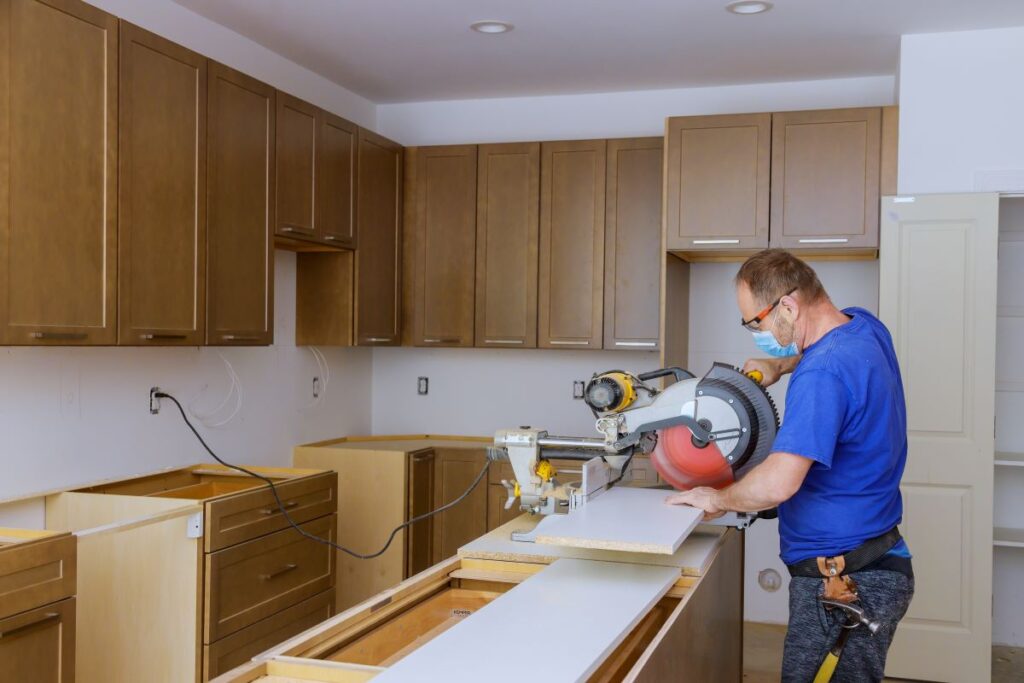
- Precision construction and delivery
- Full installation or coordination with your contractor
Here’s something most homeowners don’t realize: the family owned business that makes your cabinets should also help you catch problems before they happen. They should be practical. When we work on older kitchens in Bergen County, we almost always find out-of-level floors and crooked walls. A good cabinet maker or designer plans for that. He focuses on little specifications to create your vision.
All One Kitchen Advice: Never hire a company that won’t measure your space in person. Photos and old blueprints miss the small stuff. And small stuff becomes expensive change orders later.
Custom vs. Prefabricated Cabinets: Door Styles, Costs, and Which One Is Right for You
This is the biggest decision you’ll make.
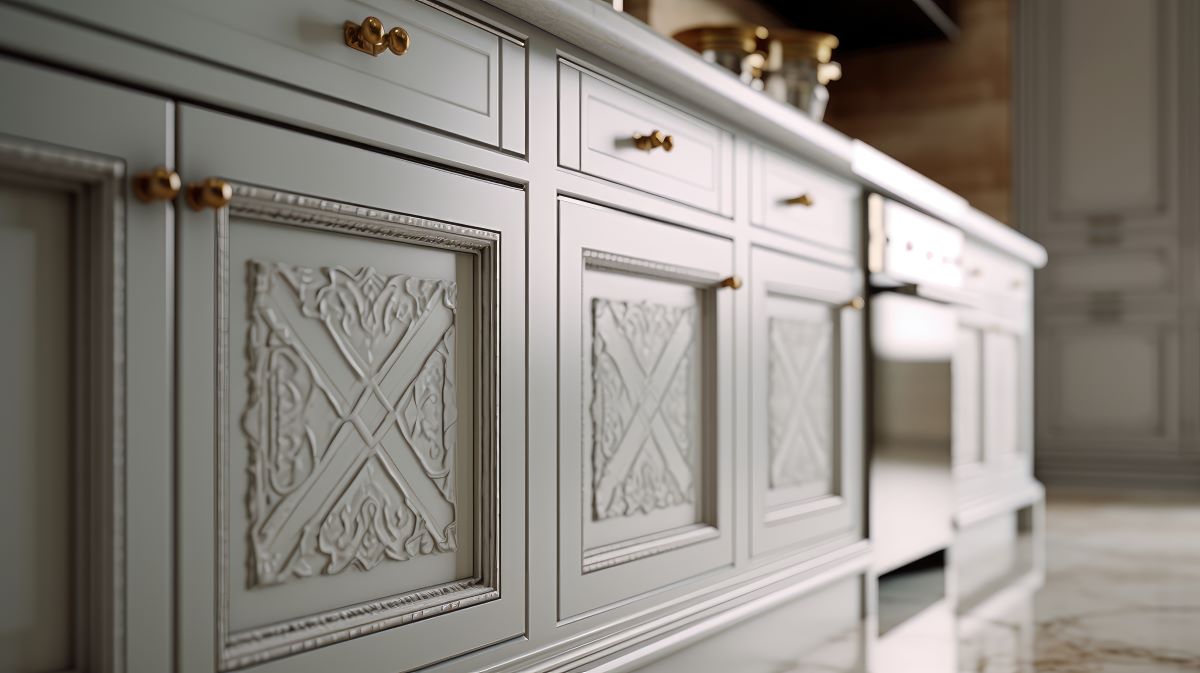
Custom cabinets are built specifically for your space. You choose every detail for a fully customized result. The wood type, finish, door styles, hardware, and internal layout from traditional to modern looks. They fit perfectly while supporting your unique style.
Prefabricated cabinets (stock or RTA) are mass-produced. You pick from a catalog. Work around the sizes they offer. They’re cheaper and faster but less flexible.
So which should you choose?
| Feature | Custom Cabinets | Prefabricated Cabinets |
|---|---|---|
| Price range | 500–500–1,500+ per linear foot | 100–100–300 per linear foot |
| Lead time | 6–12 weeks | 1–4 weeks |
| Material quality | Solid wood, premium plywood | Particleboard, MDF, some plywood |
| Sizing flexibility | Any size or shape | Standard sizes only |
| Installation difficulty | Moderate to high | Low to moderate |
If you have an old home with uneven walls or a truly unique kitchen layout, go custom. If you’re flipping a condo or need new cabinets fast, prefabricated might work fine.
Pro Tip: Most semi-custom manufacturers fall in the middle. You choose from standard sizes but pick custom finishes and door styles.
How to Spot High-Quality Craftsmanship
Cheap cabinets look fine in the showroom. Then you use them for a year.
Drawers sag. Doors won’t stay closed. The finish peels near the sink.
Exceptional craftsmanship shows up in the details you can’t see. Here’s what to look for:
- All-plywood boxes – Not particleboard. Not MDF. Plywood handles moisture and weight better. Open a drawer and look at the side panel. You’ll see layers.
- Dovetail or box-joint drawers – Stapled corners fall apart. Real joinery holds.
- Soft-close hinges and glides – Blum and Hettich are the gold standard. Cheap hardware breaks.
- Catalyzed conversion varnish or waterborne polyurethane – These finishes resist heat, water, and daily wear. Standard paint does not.
Good to Know: Look for the KCMA label. That’s the Kitchen Cabinet Manufacturers Association. They test cabinets to make sure they hold up — strength, daily use, even moisture. Cabinets that pass meet ANSI standards. It’s a simple way to know you’re getting something built right. Not every company bothers with it. So ask. If they can’t give you a straight answer, that tells you something.
A real story from a job site
Last year, a homeowner in Staten Island called me after buying “great deal” cabinets online. The boxes were particleboard. The finish scratched when she wiped a sponge across it. Within eight months, the sink cabinet floor had swollen from one minor leak.
She ended up replacing everything. Cost her twice what she would have paid upfront for quality craftsmanship.
Kitchen Cabinet Refacing vs. Full Replacement: Which one Has Affordable Prices?
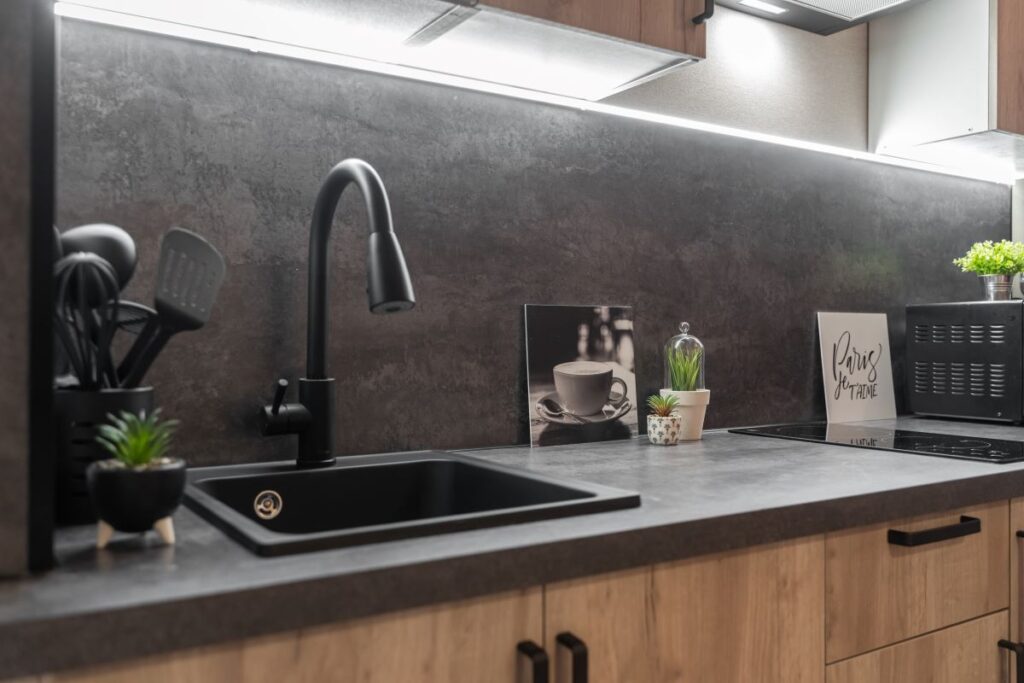
Maybe your current layout works fine. But the doors are dated, and the finish is rough.
Cabinet refacing might be your answer.
In refacing, we keep the existing cabinet framework and do nothing to it. We replace only the doors, drawer fronts, and veneers on the exposed boxes. You get a completely new look without tearing out your kitchen.
Here’s why homeowners choose refacing:
- Faster – 2 to 5 days instead of weeks
- Cheaper – 30% to 50% less than full replacement
- Less mess – No demo dust, no temporary kitchen
- Same footprint – Keep your functional layout
That said, refacing only works if your current boxes are in good shape. No rot, no water damage, no structural issues.
When we recommend full replacement:
- The layout doesn’t work for how you cook
- You have water or pest damage in the boxes
- You want to move plumbing or electrical
- The cabinet frames are low-quality particleboard
If you’re dealing with any of those issues, All One Kitchen offers free on-site estimates for full custom installation — click here to schedule a measure appointment.
Commercial Cabinet Fabrication: What Businesses Need to Know
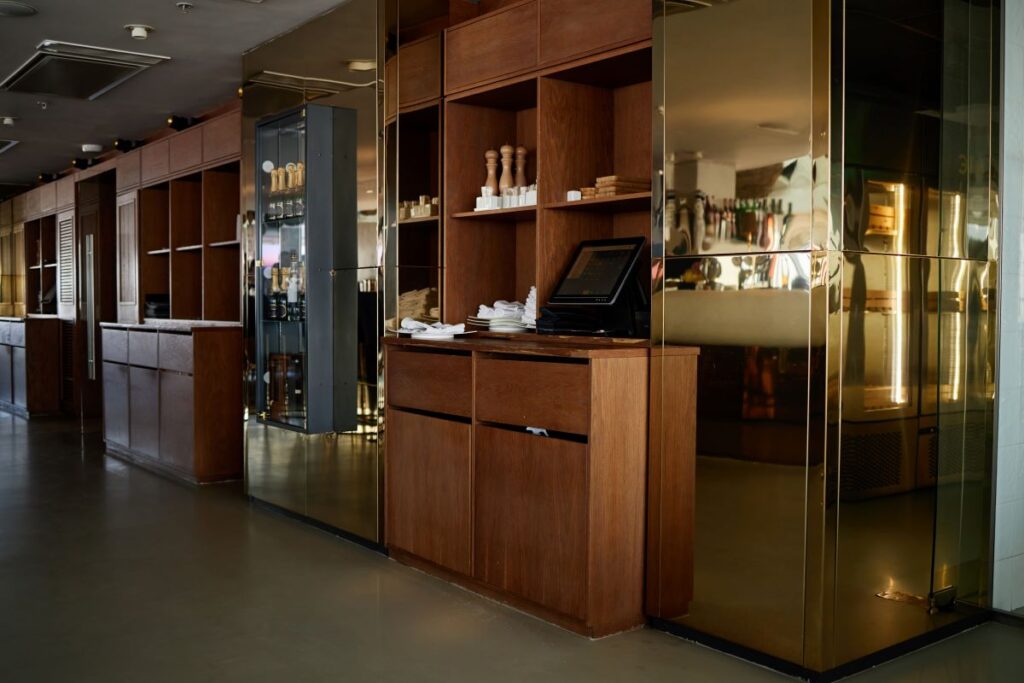
Not all cabinet making companies do commercial work.
If you’re outfitting offices, medical suites, or retail spaces, you need a shop that understands different demands. Commercial cabinets face heavier daily use. They are built for specific needs. They also have to meet code requirements that residential cabinets don’t.
Key differences for commercial spaces:
- Fire ratings – Some jurisdictions require flame-resistant materials
- ADA compliance – Pulls, heights, and clearances must meet accessibility rules
- Durability standards – High-use finishes and reinforced construction
- Faster timelines – Businesses can’t wait 12 weeks for cabinets
Look for commercial cabinet fabrication specialists who have done similar projects. Ask for references from other businesses. And make sure they carry liability and workers’ comp insurance — commercial jobs have higher stakes.
Cost Breakdown: What Should You Expect to Pay?
Prices vary wildly. But here’s a realistic range for the New York and New Jersey metro area in 2026.
| Cabinet Type | Material Cost Only | Installed (mid-range) | Installed (high-end) |
|---|---|---|---|
| Stock (RTA) | $2,000–$5,000 | $4,000–$8,000 | N/A |
| Semi-custom | $5,000–$12,000 | $8,000–$18,000 | $15,000–$25,000 |
| Custom | $10,000–$25,000 | $15,000–$40,000+ | $30,000–$75,000+ |
These numbers cover a standard 10×10 kitchen. (About 20 linear feet of cabinets). $2,000–$5,000 for demolition and disposal. Add more if you’re moving plumbing or gas lines.
The single biggest mistake we see: Homeowners buy affordable prices on cabinets but cheap out on installation. Then nothing fits right, gaps show, and doors don’t align.
My advice? Spend 10-15% of your total budget on a pro installer. That’s what leads to long-term customer satisfaction.
5 Questions to Ask Cabinet Making Companies for Better Results and Satisfied Customers
You’re the customer. Ask hard questions.
“Do you use plywood or particleboard for box construction?” – If they hesitate, walk away.
“Can I see a sample of your finish quality?” – Look for even coverage and smooth edges.
“Who does the installation — your crew or a subcontractor?” – Subcontractors are fine, but you want to know who’s showing up.
“What’s your warranty on materials and labor?” – One year is bare minimum. Five years is better.
“Are you licensed, bonded, and insured in New Jersey / New York?” – Don’t skip this. Ever.
FAQ: Your Cabinet Questions, Answered
How much does a carpenter charge to build a cabinet?
$200–$500 per linear foot for in a fully custom built cabinet. Add $50–$100 per hour for labor. A single 36” base cabinet might cost $800–$1,500 installed. That’s 2-3 times expensive than stock. But you get perfect fit and exceptional craftsmanship.
What is the 1 3 rule for cabinets?
The 1/3 rule is a design guideline.
One-third of your kitchen storage should be drawers.
One-third should be open shelving or glass-front cabinets.
And one-third should be standard solid-door cabinets.
This balances convenience, display space, and hidden storage for different functional needs. Drawers improve overall functionality than lower cabinets for pots and pans.
What are the best kitchen cabinet manufacturers?
Regional shops with meticulous attention to detail for custom work. For semi-custom, top national names include Wellborn, Medallion, and Omega. For stock cabinets that overperform, try KraftMaid or Aristokraft. The best manufacturer is the one who provides reliable materials. The one whose method perfectly matches your budget and timeline and personal style.
Is it cheaper to buy cabinets or have them built?
Stock cabinets are cheaper to buy. About half the price of custom-built. But “cheaper” isn’t always “better.” Stock cabinets use lower-grade materials. They won’t fit odd spaces. If your kitchen has standard dimensions and you’re on a strict budget, buy stock. If you want premium materials and a perfect fit, have them built.
The Bottom Line on Cabinet Making Companies
You’ve got options. Good options.
Stock cabinets save money upfront. Custom cabinets give you exactly what you want. Refacing hits the sweet spot between cost and speed.
The most important step is picking cabinet making companies that are honest about materials, timelines, and pricing. Don’t fall for cheap particleboard dressed up in nice door styles. Open the drawers. Ask about plywood. Get it in writing.
At All One Kitchen, we’ve helped hundreds of homeowners across New York and New Jersey find the right fit for their unique needs. Whether you need storage solutions for a small galley kitchen or commercial cabinet fabrication for a new office, we’re here to help. Our team works closely with homeowners.
Here’s your next step: Walk through your kitchen and measure your current cabinets. Note what works and what drives you crazy. Then call a few local cabinet making companies — including us — and ask the five questions above. The right partner will answer every one without hesitation.