
Custom Kitchen Cabinet Installation: 2026 Complete Guide, Costs & Steps (Beat Stock Cabinets)
Dreaming of a kitchen with cabinets that fit like they were made just for you? Custom kitchen cabinet installation makes that dream come true. It makes the most of every inch of space and increases your home’s value. Unlike options available off the shelf, custom cabinets provide a perfect fit to any weird layout – for example, slanted walls or tight corners.
This guide will teach you all the information that homeowners should know about the process of installing custom kitchen cabinets including facts about the installation process, the costs, the material utilized, design advice, and how to select the correct installer of the cabinets for your next kitchen project.
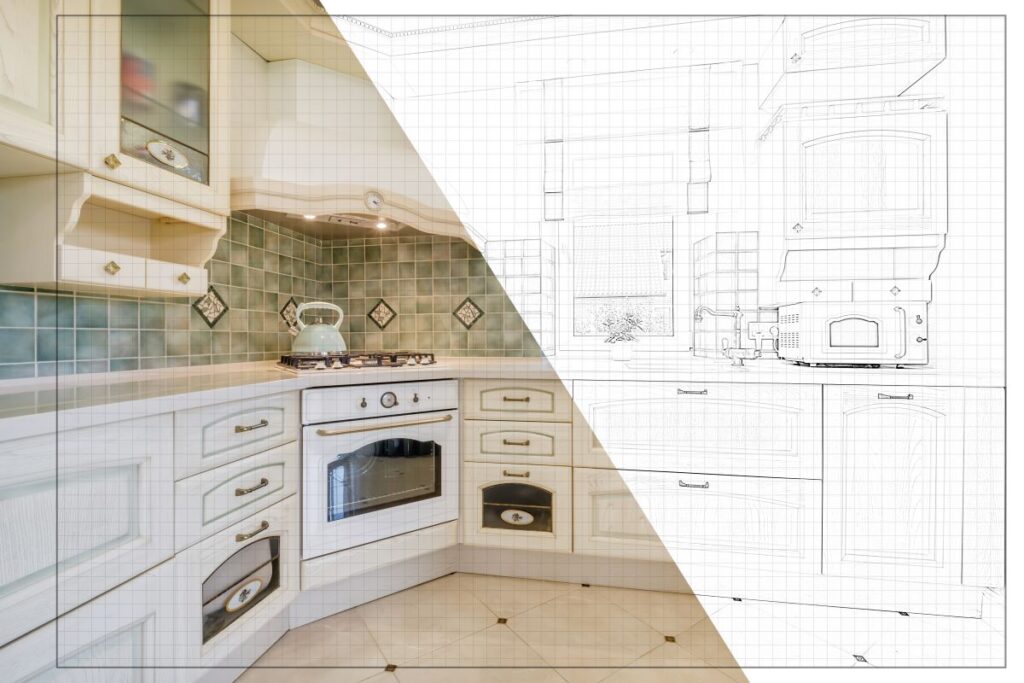
What Is Custom Installation of Kitchen Cabinets?
Custom kitchen cabinet installation refers to the design, construction and installation of cabinets that perfectly fit your kitchen. Unlike stock cabinets which you have to buy in a certain size and have to choose in a variety of designs, custom cabinets are made to suit the requirements of your kitchen and your own vision of design.
Why Choose Custom Kitchen Cabinets Over Stock?
When you see that wasted corner space or cabinets that don’t fit your style, it’s really annoys you. Custom kitchen cabinets eliminate that problem. They get built as per your exact measures and tastes, helping you envision the perfect kitchen layout.
These cabinets are made of superior quality materials such as solid maple or walnut. They have strong dovetail joints that have a lifespan of 25 – 50 years. That’s a lot longer than stock versions, which tend to wear out in just 10 years.
Homeowners are fond of the personalization options. Think pull out spice racks so it’s easy to access. Or soft-close drawers that glide shut without a sound, customized to the way you cook on a daily basis, while improving kitchen functionality. Plus, they carry a 70 – 80% return on investment when you sell your home. Your kitchen grabs the attention of buyers immediately.
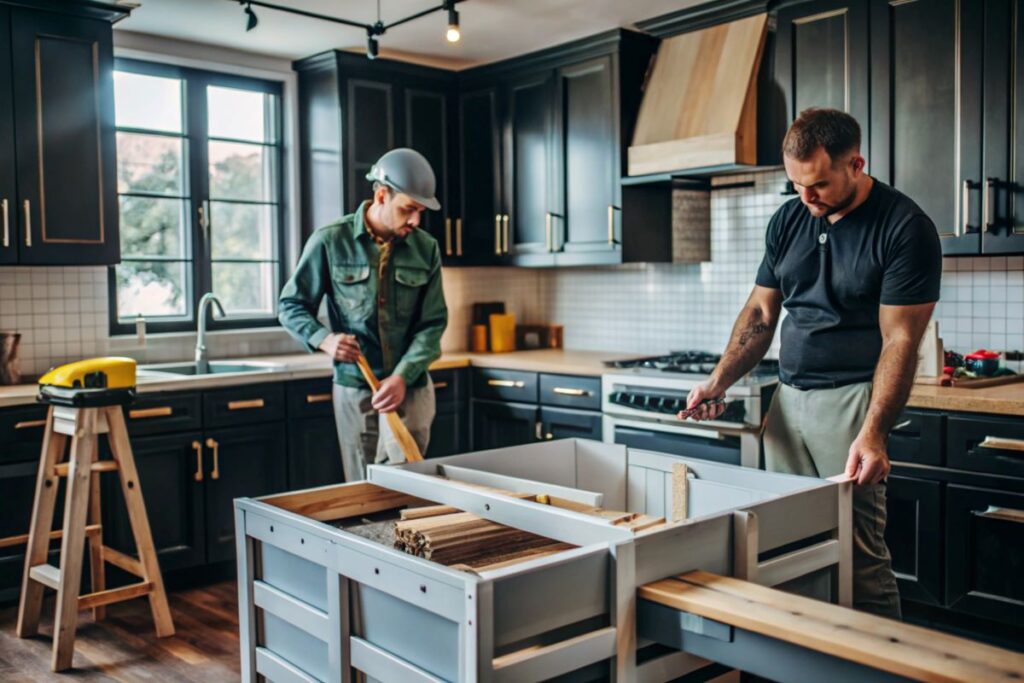
Cost to Install Custom Kitchen Cabinets 2026: What to Expect
Budgeting smart is the key for residants planning a remodel. Nationally, the cost of custom installation is $500 – $1,500 per linear foot. To have a complete kitchen, that’s $15,000 – $90,000.
Materials account for approximately 30% of the cost, or $150 to $450 per foot. Labor takes 40%, at $200–$600 per foot. Extras like hardware run $50–$200 each. Think it as investing in a kitchen that lasts for decades.
Here’s a quick breakdown in a simple table:
|
Cost Factor |
Custom Cabinetry Prices Per Foot |
Homeowner Tip |
|---|---|---|
|
Materials (wood/finish) |
$150–$450/ft |
Opt for alder to save vs. exotic woods like walnut. |
|
Labor/Installation |
$200–$600/ft |
Bundle with counters for package deals and savings. |
|
Hardware/Add-ons |
$50–$200/uni |
Prioritize soft-close features on your most-used spots. |
DIY Custom Kitchen Cabinet Installation Process in Steps
Ready to dive in? Here’s the pro process. It’s straight from installers who handle hundreds of kitchens each year. Skip full DIY unless you’re very handy. Uneven installs can cost thousands to resolve later.
Step 1: Design Consultation and Precision Measurements
Start with a designer visit. They measure everything to the 1/16 of an inch. You’ll chat about your needs—like extra pantry space for bulk groceries. They create 3D renders to show your new kitchen and help clients clearly see the design before installation begins.
This step avoids costly mistakes down the line. It usually takes 1–2 weeks. Good measurements are the foundation—get them wrong, and nothing else fits right.
Step 2: Pick Your Materials and Style
Now choose your look and feel. Go with shaker style for timeless appeal that fits any home. Or pick modern slab doors for a sleek contemporary aesthetics style.
For busy families, durable oak holds up to dings and spills. Sleek walnut adds luxury and durability for upscale feels. Match hardware, like matte black pulls, to your quartz counters. Test samples under your kitchen lights to see the real colors.
Step 3: Fabrication Phase (4–8 Weeks)
High quality craftsmanship construct your cabinets in a workshop using years of cabinet maker expertise. They use sturdy plywood boxes – no cheap particle board sags over time. Solid wood fronts go on next with careful attention to detail.
Expect to approve wood samples along the way. Rushing this phase can lead to warping, especially in humid kitchens. Many shops let you track progress online for updates.
Step 4: The Big Install Day(s)
This is when it all comes together. Pros remove old cabinetry first. They level the floor with shims for a solid base. Upper cabinets go up first, hung 18 inches above the counter height.
They scribe fillers to match wonky walls perfectly. Then add trim for a polished finish. The whole install takes 2–5 days. Protect your floors with drop cloths and keep kids or pets out of the way. Remember! safety always matters during installation work.
Step 5: Finishing Touches and Final Check
Hook up under-cabinet lights, appliances and extras, if any. Do a complete walk-through with them. Check for squeaks and gaps or sticky drawers. Pros adjust hinges and slides right there.
Load up a few drawers to test real use. Sign off only when everything feels perfect. This ensures your kitchen works smoothly from day one. This step alsoreflects the install team’s commitment and dedication to delivering quality results.
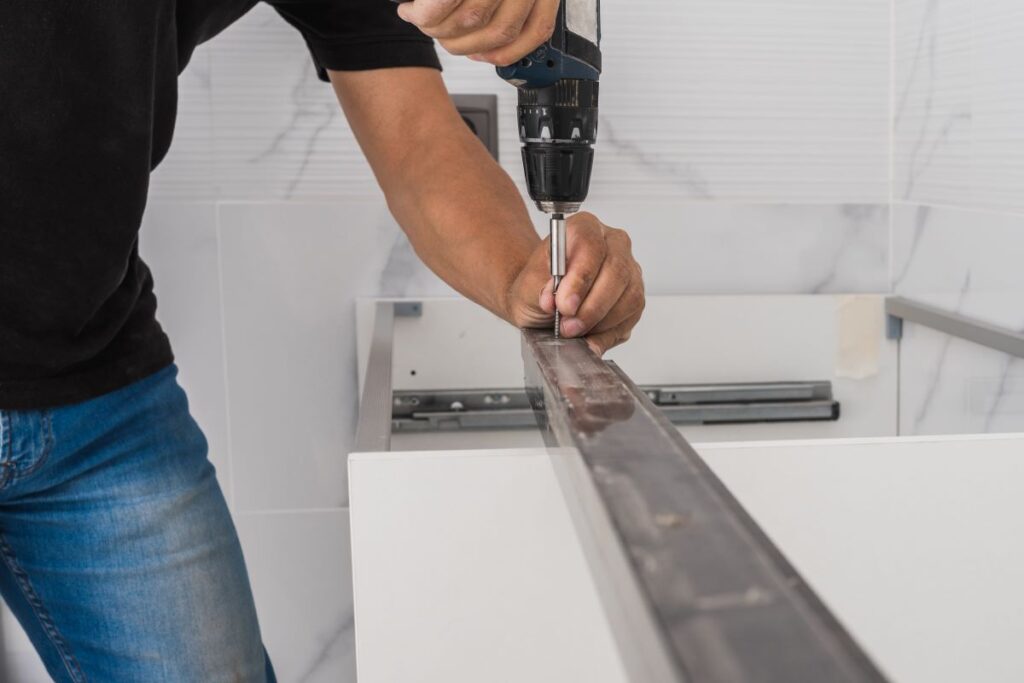
Custom vs. Stock Kitchen Cabinets vs. Semi-Custom: Which Wins for Your Dream Kitchen?
Having second thoughts about custom? Let’s break it down simply. Both types have their niche, yet custom usually wins in the long term homeowner. Here is a plain side by side view.
|
Type |
Cost per Ft |
Space Fit |
Lifespan |
|---|---|---|---|
|
Custom |
$500–$1,500 |
Perfect (any size) |
25–50 years |
|
Semi-Custom |
$150–$650 |
Good (3″ steps) |
15–25 years |
| Stock |
$100–$300 |
Basic (fixed sizes) |
10 years |
Custom cabinets win big because they fit exactly—no gaps or fillers needed. Stock ones come in set sizes like 30 inches wide, so you cram them in and add wood strips to hide spaces. That wastes room. Semi-custom tweaks a bit, like adjusting depth, but still snaps to 3-inch grids.
Take older homes: Odd angles or slanted ceilings? Custom reclaims 20% more storage with tailored heights or curves. Stock leaves dead space above, gathering dust. If you’re flipping a house fast, stock saves cash and time. But for daily living? Custom feels like home.
Avoid These Common Installation Mistakes
Sagging doors from weak hinges? Gaps pulling cabinets off walls? These headaches hit new kitchens too often. Smart homeowners spot them early.
Start by inspecting deliveries. Check for dings, cracks, or wrong sizes before the truck leaves. Snap photos and note issues right away—saves arguments later.
Talk daily with your install team. Text updates or quick calls keep everyone on track. Prep walls and floors first: Find studs with a finder, patch holes, sweep clean. A level base stops wobbles.
Here are key pro tips:
- Hire licensed installers and cabinet makers—peek at reviews on sites like Yelp or Google.
- Ventilate rooms during paint or finish work—no one wants fumes lingering.
- Test every drawer loaded up before signing off. Empty glides fine; full ones reveal truths.
Skip these, and fixes add $1,000+. Done right with committed professional, your kitchen stays solid for years.
Maximize ROI: Why Custom Cabinets Pay Off Long-Term
Custom cabinets scream “high-end” to buyers. They recoup 70–80% of your cost on sale—top marks for remodels. Think quartz shines on custom frames; stock fades fast.
They future-proof too. Add smart tech like app-lit drawers or USB hubs inside. Tweak for aging in place—lower uppers or pull-down shelves. No full rip-outs later.
Stay put 10+ years? Daily joy pays off most. No more junk drawers overflowing. Cooking flows smooth. In hot markets, custom speeds sales—buyers see “move-in ready luxury.” It’s not just cabinets; it’s value that lasts decades.
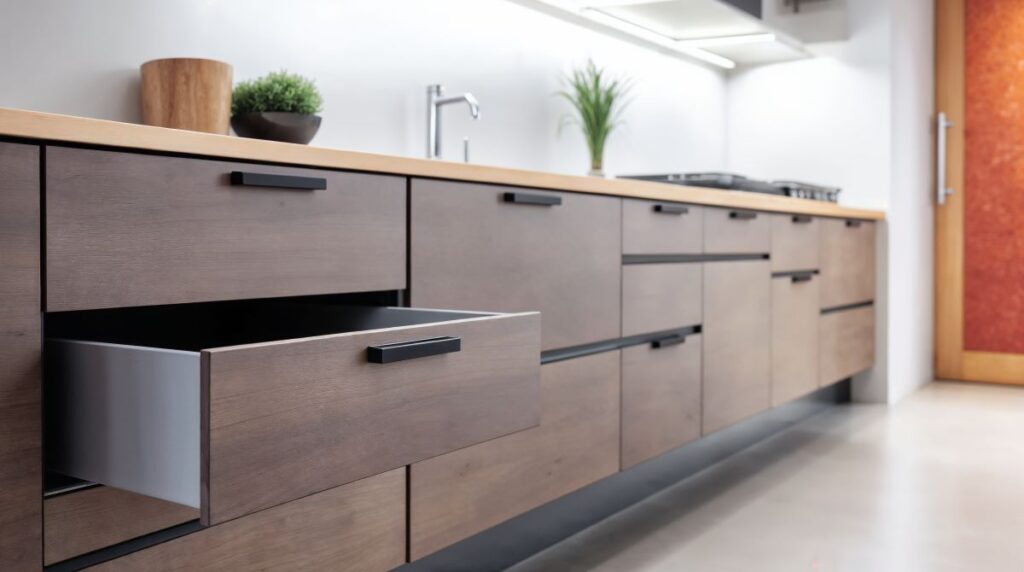
Pro Tips for Smooth Custom Kitchen Cabinet Installation
These tips ensure safety, precision, and lasting results.
- Demolition Done Right:
- Pros downplay demo, but it risks floors and shared spaces.
- Hire teams that protect surfaces with tarps and prioritize safety—keep hallways clear.
- Handle Utilities First:
- Move electrical outlets, switches, or plumbing to match your new layout.
- Plan this before cabinets arrive—avoids delays or code issues.
- Pre-Installation Checks:
- Ensure walls are straight and floors level—use a laser level.
- Find the floor’s high point; shim from there for perfect alignment.
- Delivery and Inspection:
- Team coordinates drop-off and checks every piece for damage.
- Review quality on-site before install starts.
- Hardware and Finishes Matter:
- Choices like handles boost function and style—use a $10 jig for even spacing.
- Finishes protect against moisture, stains, and wear; pick paints or stains wisely.
- Install Team Handles It All:
- From placement and leveling to screwing into studs and tweaking hardware.
- 3–5 days typical: Prep walls, secure bases, hang uppers.
- Quality Checks at End:
- Penultimate walkthrough: Test function and finish.
- Final project inspection: Matches design specs and building codes.
- Refacing vs. Replacement Option:
- Reface: Swap doors/drawers on old boxes—cheaper, faster.
- Replace: Full new system for total refresh.
- Custom wins for personalization; longer lead times but perfect fit.
- Extra Perks of Pros:
- In-house designers guide residential/commercial projects.
- Minimal disruption—back to cooking fast.
- Tailored for style, storage, and resale ROI around 75%.
These fill gaps like utilities, inspections, and refacing. They make your custom kitchen cabinet installation hassle-free and pro-level.
FAQs: Custom Kitchen Cabinet Installation
How long does the full process take?
12–20 weeks total. Break it down: 1–2 weeks design, 4–8 weeks building, 2–5 days install. Rush jobs risk quality.
What’s the average cost per linear foot in 2026?
$600–$1,300 across the U.S. Materials drive it—oak cheaper than walnut. Cities add 20% for labor.
Should I DIY or hire pros?
Hire pros for flawless fits and warranties. DIY works for simple uppers if you’re skilled. Full jobs? Risks like uneven lines cost more to fix.
What if walls aren’t square?
Custom handles it with scribes and shims. Stock fights back, needing extra fillers.
Best wood for families?
Oak—tough against kids and spills, easy to refinish.
Ready to transform your kitchen? Contact a local custom installer for a free consult—your dream space awaits!
Conclusion: Ready for Your Custom Kitchen Cabinet Installation?
There you have it-your whole roadmap through to custom kitchen cabinet installation that happens to beat stock hands down. From accurate measurements to premium materials to smart budgeting to pro installation steps, custom cabinets offer you a kitchen that fits just right, stores it all easily, and will last for decades to come. They add value to your home with ROI of 70-80% turning your daily cooking into a joy and future proof your home for family needs or resale appeal.
Don’t be content with the gaps and generic looks. Custom kitchen cabinet installation means personalized style, superior craftsmanship and max storage no stock can match. Homeowners that go custom rave about the seamless fit and long-term savings. Ready to make it happen? Reach out for a free consult with a trusted local installer today – your dream kitchen is a few weeks away!
About Us

Leave A Comment